
ADA Compliant Hand Dryers: A Guide for Facilities
ADA compliant hand dryers support more inclusive restroom design by making hand drying accessible to people with a wide range of physical abilities. For facility managers, contractors and architectural specifiers, selecting the right unit is only part of the process. Dryer dimensions, mounting position, clear floor space and the surrounding circulation path must all be considered.
Airdri designs premium, touch-free hand dryers with slim profiles that meet ADA requirements as standard surface-mounted units when installed correctly, offering practical options for airports, schools, hospitality properties, offices and other commercial facilities.
What Makes a Hand Dryer ADA Compliant?
ADA hand dryers must be positioned so people using wheelchairs and those with limited mobility can approach, reach and operate them. Important considerations include how far the unit projects from the wall, the height and reach of its controls or sensor, and whether the required clear floor space is available. Touch-free activation can improve usability because it does not require the user to grasp, pinch, twist or apply force to a button. It also supports hygienic operation by reducing the need to touch a shared surface.
A dryer described as ADA compliant does not automatically make the complete installation compliant. The finished accessible restroom must also provide an appropriate path to the unit and sufficient room for users to approach and maneuver. Federal standards should be considered alongside applicable state, local and project-specific building requirements. Project teams should review the latest requirements with the relevant code authority before finalizing product selection or installation plans.
Hand Dryer Height, Reach and Protrusion Requirements
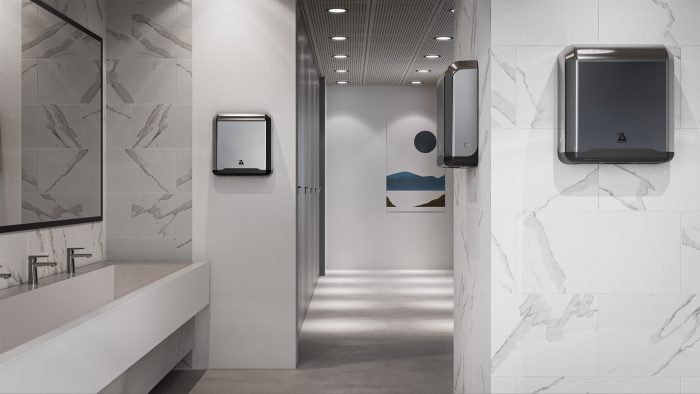
The ADA limits how far certain wall-mounted objects may extend into circulation paths. When an object’s leading edge is more than 27 inches and no more than 80 inches above the finished floor, it generally cannot protrude more than four inches from the wall. Slim, surface-mounted hand dryers can help meet this requirement without the added work and expense of creating a wall recess. A deeper dryer may require recessed installation depending on its position within the restroom.
Accessible operable parts generally must be within the applicable reach range, which commonly has a maximum height of 48 inches above the finished floor for an unobstructed approach. This does not create one universal hand dryer height for every project because mounting requirements depend on the sensor location, approach and surrounding obstructions. Facilities must also provide a clear floor space of at least 30 by 48 inches at the accessible element. Before purchasing a dryer, measure the intended mounting area, locate the operable sensor and confirm that people can approach the unit from the available floor space.
Choosing Hand Dryers for Accessible Commercial Restrooms
Accessibility should be the starting point, but a hand dryer must also suit the facility’s operational needs. Drying time matters in busy airports, stadiums, restaurants and retail properties where slower units can contribute to lines. Energy consumption affects long-term operating costs, while the dryer’s sound output may be especially important in hotels, offices, libraries, schools and healthcare settings. Durable covers, anti-vandalism features and straightforward maintenance can further support dependable service in public restrooms.
Automatic sensors allow people to activate a dryer without touching its surface or operating a control manually. This helps reduce contact with shared restroom fixtures while keeping the drying process simple. Facilities with specific contamination-control priorities may also consider a model with HEPA filtration. Procurement teams should evaluate these features together rather than choosing a unit based only on purchase price. A well-engineered premium dryer can offer greater long-term value through reliable operation, energy efficiency and reduced maintenance requirements.
ADA-Compliant Airdri Hand Dryer Options
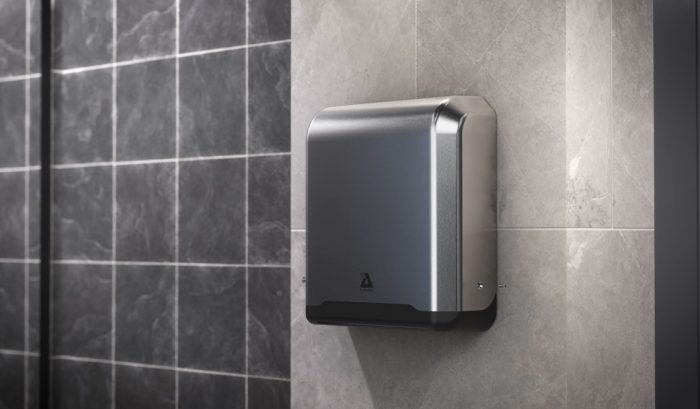
The Airdri hand dryer range provides ADA compliant hand dryers for different restroom environments. Each model has a slim profile and can meet ADA protrusion requirements as a standard surface-mounted unit when properly positioned. All three models use touch-free infrared activation and include durable covers with anti-vandalism features. They are also backed by Airdri’s seven-year warranty, supporting long-term value for facilities seeking premium equipment.
The PowerDRI is the fastest dryer on the market, with a 10-second dry time, an energy-efficient 800-watt motor and an H13 HEPA filter. At 3 15/16 inches deep, it is designed to meet ADA protrusion requirements without a recess kit. The CompactDRI offers a 15-second dry time, 1,000-watt performance and a 70 dBA sound output in a similarly slim design. For quiet facilities, the ComfortDRI is Airdri’s lowest-noise model at 67 dBA. It combines a 15-second drying time with warm air and a comfortable user experience.
Surface-Mounted Dryers, Recess Kits and Retrofits
Surface-mounted dryers are generally simpler to install and maintain because the unit remains accessible without requiring a wall cavity. However, models deeper than four inches may need a recess kit when mounted in a circulation path covered by the ADA protrusion rule. Recessed installation can also involve additional framing, finishing and electrical work. Airdri’s slim designs eliminate the need for a recess kit to meet protrusion requirements, helping simplify specifications for new construction and restroom renovations.
Retrofit projects require careful site assessment because existing wall construction, wiring, plumbing and fixture placement may limit available locations. Before replacing an older dryer, confirm wall depth, electrical supply, mounting points, sensor height and floor clearance.
Professional installation helps confirm that the unit is secured correctly and positioned according to its instructions. Facilities should retain technical data sheets, installation records and final measurements so they can demonstrate the basis for product and placement decisions during future reviews or inspections.
ADA Hand Dryer Installation and Procurement Checklist
Before ordering, confirm the dryer’s overall depth and determine whether it will be mounted in a circulation path. Review the planned hand dryer height, sensor position, accessible reach range and 30-by-48-inch clear floor space. Check that surrounding fixtures do not obstruct the approach and that the dryer can be used from the available position. The layout should accommodate both left- and right-handed users wherever practical. Measurements should be verified at the actual mounting location rather than estimated from floor plans alone.
Procurement teams should also compare drying speed, energy use, noise output, filtration, finish options, maintenance requirements and warranty coverage. Request current technical sheets and installation instructions before approving a model, and verify applicable federal, state and local requirements with the project’s qualified professionals. To discuss product specifications, lead times or the right ADA compliant hand dryer for your facility, talk to an expert at Airdri.